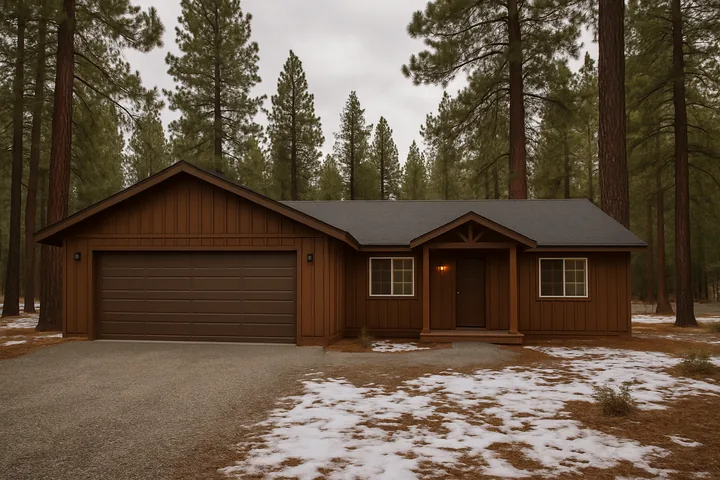
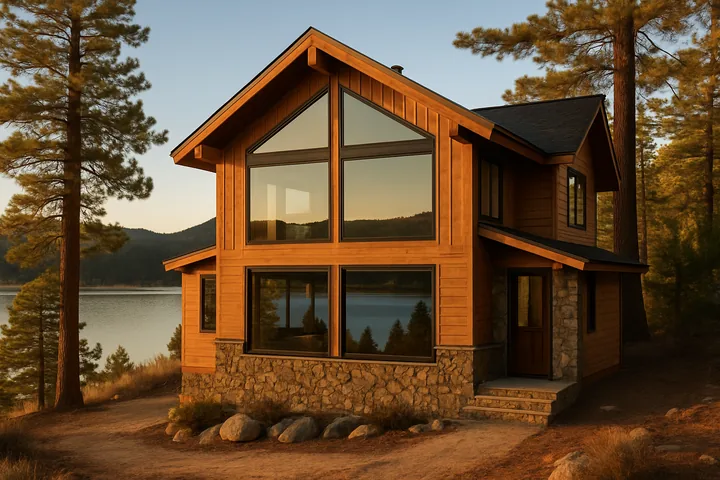
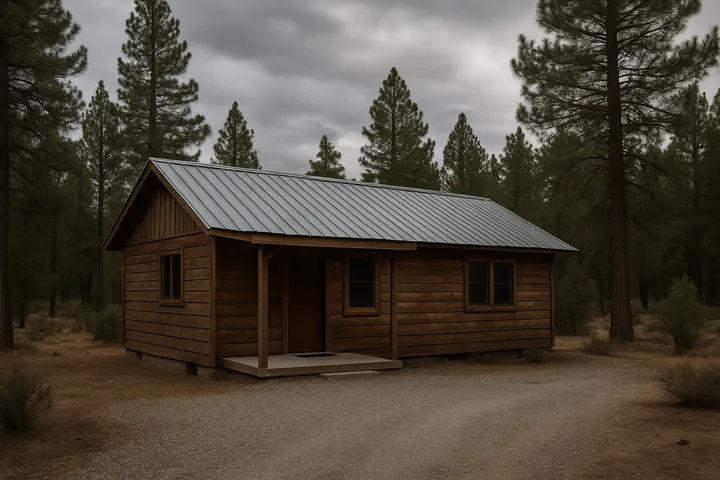
Engine-derived ROI benchmarks for Big Bear-area short-term rentals, single-family rentals, and small commercial properties. Numbers come from running real fixtures through the Cost Seg Smart engine — same engine that produces your actual study. Studies from $495.
Operated by Cost Seg Smart. Studies are IRS-aligned, audit-defense-included. 5 fixture benchmarks computed May 2026.
Numbers above are engine-estimated outputs from running 5 representative fixtures — not promises about what your specific property will produce. Results vary based on actual property condition, year built, renovation history, county assessor data quality, and rental treatment (STR vs LTR). Full per-fixture table, neighborhood breakdown, and downloadable CSV/PDF on the Big Bear cost seg benchmarks page.
Big Bear sits in an unusual structural position relative to other Southern California STR markets: it's the closest ski-resort cabin economy to the Los Angeles basin (a 2.5-hour drive vs 5+ hours to Mammoth Lakes), the entry price point is meaningfully lower than coastal alternatives, and the year-round demand profile is unusual — ski traffic November–April and lake-and-hiking traffic June–September, with shoulder-season ADR softness March–May and October.
California's §168(k) decoupling is the structural cost-seg disadvantage here — and unlike Tahoe (where buyers can elect the Nevada side to escape the decoupling), Big Bear is entirely in San Bernardino County, California. There's no cross-state Nevada option. Every Big Bear owner facing California's top 13.3% bracket sees the addback on Schedule CA (540), and the headline federal-savings number overstates total tax savings by 1–2 percentage points of the accelerated reclassification dollars depending on bracket. The federal benefit at 100% bonus is still substantial and real; the state-side recovery is meaningful but slow.
Property-archetype-wise, Big Bear is unusually heterogeneous. The market mixes 1960s–1980s A-frame ski cabins (heavy renovation cost segregation drives the math), early-2000s family-home cabins in Moonridge and Big Bear City, post-2015 boutique builds in Fawnskin, and rural Sugarloaf product that often crosses into long-term-rental territory. Engine reclassification ratios run 17–26% across the spread, with the highest ratios in the post-2015 Fawnskin product (low land + new construction) and the lowest in the lakefront Big Bear Lake stock (high land + heritage construction).
Permit reality: The City of Big Bear Lake operates an active short-term-rental permit system with neighborhood density caps. Unincorporated San Bernardino County around Big Bear City and Sugarloaf is more permissive. STR-intent buyers should verify a property's jurisdiction before underwriting.
Decoupling: California's decoupling is permanent and structural, not a temporary policy choice — it predates the federal §168(k) provision. For Big Bear cost-seg planning, model the federal benefit as your primary win and treat any California state savings as recovered slowly over the regular MACRS schedule.
Verify with your CPA. State tax conformity rules for federal §168(k) bonus depreciation are adjusted frequently — multiple states have modified their treatment two or more times in the past decade. The general framing on this page reflects our understanding as of May 2026, but you should always verify current-year treatment with a qualified CPA or tax attorney before relying on specific dollar projections for your situation.
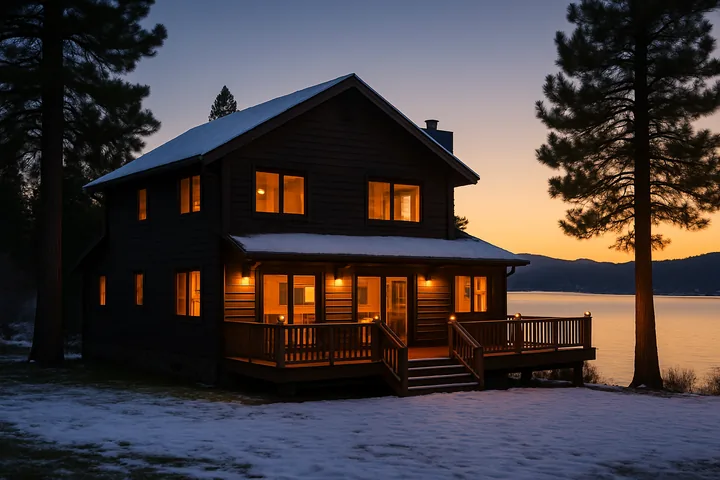
These aren't rough estimates. Each fixture was run through the same engine that produces your actual study — RSMeans 2024 base costs, BLS PPI time index, county assessor land allocation, IRS Pub. 946 / Rev. Proc. 87-56 MACRS classification, 100% bonus depreciation per OBBBA.
| Purchase price | $875,000 |
| Depreciable basis | $571,638 |
| Land allocation | 34.7% |
| 5-year reclassified | $110,304 |
| 15-year reclassified | $35,725 |
| Total reclass | 26.1% |
| Purchase price | $685,000 |
| Depreciable basis | $430,591 |
| Land allocation | 37.1% |
| 5-year reclassified | $83,634 |
| 15-year reclassified | $27,730 |
| Total reclass | 26.4% |
| Purchase price | $485,000 |
| Depreciable basis | $318,984 |
| Land allocation | 34.2% |
| 5-year reclassified | $57,316 |
| 15-year reclassified | $20,900 |
| Total reclass | 25.0% |
| Purchase price | $595,000 |
| Depreciable basis | $390,380 |
| Land allocation | 34.4% |
| 5-year reclassified | $75,975 |
| 15-year reclassified | $24,132 |
| Total reclass | 26.2% |
| Purchase price | $365,000 |
| Depreciable basis | $242,178 |
| Land allocation | 33.7% |
| 5-year reclassified | $22,358 |
| 15-year reclassified | $16,297 |
| Total reclass | 16.0% |
Cost-seg ROI varies more by neighborhood than by city. Big Bear's 5 sub-markets each have their own land-allocation pattern and property archetype:
| Neighborhood | Typical value | Typical land allocation | Profile note |
|---|---|---|---|
| Big Bear Lake (city, lakefront) | $825,000 | ~28% | City of Big Bear Lake proper — incorporated, subject to the city's STR permit regime. Lakefront premium and walkable proximity to Big Bear Village. Mid-rise lakefront condos and SFR mix. |
| Moonridge (Bear Mountain Resort base) | $685,000 | ~26% | Ski-resort base sub-market at Bear Mountain ski lifts. Cabin and chalet stock with strong winter ADR. Slightly inland from the lake but ski-accessible. |
| Big Bear City (unincorporated) | $485,000 | ~22% | East of the city proper, unincorporated San Bernardino County — no city STR permit but state and county registration apply. Lower entry pricing, larger lot sizes, year-round resident mix. |
| Fawnskin (north shore) | $595,000 | ~30% | North shore of Big Bear Lake — smaller community, lakefront and lake-view premium. Higher land allocation due to view/lake-frontage scarcity. Boutique STR product. |
| Sugarloaf (eastern, rural) | $365,000 | ~18% | Easternmost sub-market, rural cabin and SFR stock. Lowest entry pricing, lowest land allocation, weaker STR demand profile — often a long-term-rental crossover or owner-occupied retreat. |
Methodology note: "Typical land allocation" reflects baseline patterns for the sub-market. For ultra-premium or resort-tier inventory where reconstruction cost exceeds 2.0× the implied depreciable basis after subtracting baseline land, the engine applies a premium land floor (~50%) to keep the study within audit-defensible territory. This means individual fixture engine output may exceed the neighborhood typical — especially for resort-tier ski-in/ski-out, beachfront, or view-premium product where land scarcity dominates value. See the /data/ page for per-fixture land-source attribution. Results vary substantially by specific property condition, renovation history, and assessor records.
City of Big Bear Lake operates an active STR permit system with annual renewal requirements, neighborhood density caps, occupancy limits, and noise/parking compliance triggers that can revoke permits for repeat violations. Permits are tied to properties and have transfer-on-sale procedures. Unincorporated San Bernardino County (Big Bear City, Sugarloaf, parts of Fawnskin) operates a county-level STR registration with lighter restrictions. STR-intent buyers should verify jurisdictional boundaries and permit status before closing — addresses on the same road can fall under different regulatory regimes depending on incorporation lines. Material participation under §469 is achievable for self-managing operators, but Big Bear has a well-developed full-service property-management ecosystem (Big Bear Cool Cabins, Destination Big Bear, RedAwning local affiliates) and most owners use professional management, which makes the >100-hour-and-more-than-anyone test difficult to clear.
For the full IRS-rule reference layer (§168(k), §469 material participation, state conformity), see irsdepreciationrules.com — our open reference site.
Specifically: California requires you to add back the federal §168(k) bonus depreciation deduction on Schedule CA (540) and depreciate the basis on the regular MACRS schedule for California purposes. For a Big Bear cabin owner in California's top 13.3% bracket taking $80,000 of accelerated reclassification, the federal savings at 37% bracket is $29,600 — and that's real cash, captured in Year 1. The California state portion would have been $10,640 (13.3% × $80,000) if California conformed, but because of decoupling, that California-side benefit is recovered slowly over the regular 27.5-year (residential) or 39-year (commercial) MACRS schedule rather than concentrated in Year 1. You don't lose the deduction permanently for state purposes; you lose the acceleration. Most California-resident Big Bear buyers should model federal-only savings as their primary Year-1 win.
Same engine, same MACRS rules, same California decoupling, same state-tax brackets. The differences are in the underlying property mix and demand profile, not in the cost-seg study itself. Big Bear is the higher-volume STR market (more permit-friendly, larger inventory, broader price range), with year-round demand from both ski and lake traffic. Lake Arrowhead is smaller, more residential-resident, and has historically had stricter STR regulation in unincorporated portions of San Bernardino County around the lake. For an owner who is buy-box-flexible between the two, Big Bear typically wins on operating economics and Lake Arrowhead can win on land-allocation efficiency (more SFR-dominant stock). The cost-seg differential is rarely the deciding factor.
Land allocation. Big Bear Lake city proper, especially the lakefront, runs 26–32% land allocation in the engine outputs because the lakefront premium is priced into the land component rather than the structure. By contrast, Moonridge (ski-resort-adjacent but inland from the lake) runs 24–28%, Big Bear City (unincorporated, mid-elevation) runs 20–24%, and Sugarloaf (rural east) runs 16–20%. Higher land allocation means less depreciable basis as a percentage of purchase, which compresses the reclassification ratio. The absolute dollar deductions are still larger on the high-priced lakefront product because the basis is larger, but the percentage-of-purchase ROI tells a different story.
Indirectly. The permit system itself doesn't change the engine's component analysis or MACRS classification. It affects three upstream factors. (1) Hold-period assumptions: permits have annual renewal and can be denied for compliance violations — buyers should model conservative 5-year STR-revenue assumptions rather than 10+ year horizons. (2) Property valuation: a property with a verified active permit trades at a premium to an otherwise-identical property with a pending or contested permit. (3) Material participation under §469: city-permit compliance reviews can require professional management, which makes the >100-hour test harder to clear. Verify permit status and recent compliance history before closing.
Three-step framework. (1) Run the engine on your actual property and capture the accelerated reclassification dollars (5/7/15-year amounts). (2) Apply your federal marginal bracket (typically 32%, 35%, or 37% for the buyer cohort that finds cost-seg economical) — that gives you Year-1 real federal cash savings. (3) Note the California addback amount separately: the same accelerated dollars × your California marginal rate (up to 13.3%) shows what the California acceleration would have been worth, and that recovery happens slowly over the regular 27.5/39-year schedule. Don't add steps 2 and 3 together when modeling Year-1 cash — the California portion isn't a Year-1 win. Use step 2 as the underwriting number and step 3 as a long-tail recovery.
More general cost-seg questions answered at costsegsmart.com/faq/.
Cost Seg Smart studies are IRS-aligned, engineering-reviewed, and include written audit defense. Pricing is transparent and starts at $495 for residential properties under $300K — full pricing on the main site.